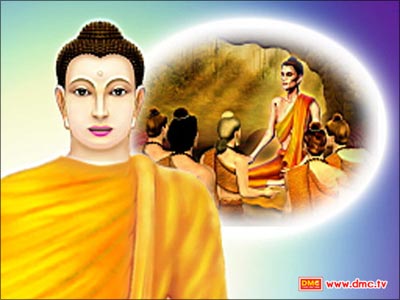
It was due to the great compassion of the Lord Buddha that he deigned to teach Noble Discipline, not only for monks, but for householders too, in the form of Noble Self-Discipline for Householders [gihivinaya], as a guideline for achieving happiness in life and developing society.
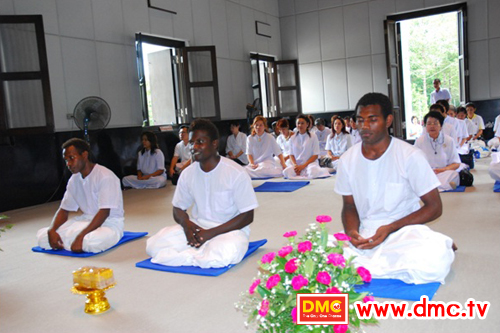
Learning Meditation : Sit upright with your right leg on your left leg. Place your right hand on your left hand. Let your right index touch your left thumb
“…the wise man [pandita] knows four kinds of True Friends well. They are: The Helpful Friend [upakaraka], the Constant Friend [samanasukhadukkha]
Those who have refined minds can foresee that resources in this world are limited. They try to share their incomes with other people in the society, nation, and the world for the benefit of each individual as just as possible.
What we mean by the ‘mind’ in not the brain, but something more similar to the ‘spirit’ which exists inside our body. In this book we use the word ‘mind’ to mean this nuomenon.
Today, think of the phrase “ Naddhi Santi Parang Sukhang ” : there is no happiness beyond serenity of the mind. Such are the words of every Buddha in the past, present, and future.
Naturally we need to carefully observe the behaviors of those with whom we associate. It may to be easy to be able to tell what kind of a person they are because the persons may appear as our friends when is fact they could be false friends or even enemies
The Lord Buddha’s explanation of the Cessation of Suffering includes all four of the Origin of suffering’s implications in the light of the Four Noble Truths:
In conclusion it can be said that the real reform that is needed to transform society for the better is reform of our own and others’ human nature
When the Lord Buddha had finished his explanation of the origin of suffering, he continued with an explanation of the cessation of suffering