This sort of view advocates any form of practice which praises pr honours the virtues of others. To give some examples:
It is difficult for a person to have the right thought to persistently cultivate good deeds and virtues for themselves
All that has been mentioned in the forgoing chapter are virtues which need to be instilled in the hearts of the people destined for self-improvement-because anyone with positive core values has the seeds of growing up into the sort of person for whom society is crying out.
I pay homage to the Buddha, the Dhamma, the Sangha, and the great teachers who have imparted upon me the Dhammakaya Knowledge.
This form of mindfulness is mindfulness that is constantly monitoring the level of wholesomeness in the mind never letting wholesomeness slip away from the mind and its intentions
The 38 Ways to Happiness. The Fifth Group of Blessings. Blessing Sixteen :- Dhamma Practice.
We have always known that the Lord Buddha’s teachings contain a total of 84,000 topics. For me as a school teacher, I would like to ask which parts of the Teachings I should lecture to the school students at the primary and secondary levels.
The 38 Ways to Happiness. The Fifth Group of Blessings.
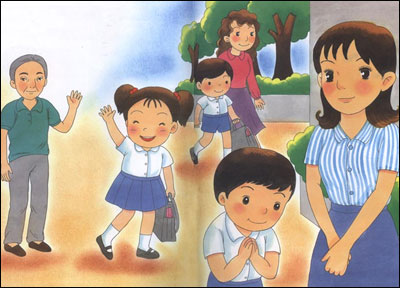
The 38 Ways to Happiness. The Fourth Group of Blessings. Blessing Eleven :- Cherishing our parents.
Practising the Noble Eightfold Path is not just the duty of the saint or the monk striving for Nirvana –it is also a means by which the householder can secure happiness